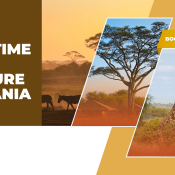
A First-Time Safari Adventure in Tanzania

A First-Time Safari Adventure in Tanzania
When I took my first Tanzania safari with Unforgettable Travel Company – Enduimet Adventure Safaris, my first-ever time visiting Africa – I was certainly excited but knew my secret hope of living the real-life Lion King was probably foolish. Mostly, because I knew animals don’t talk. And you can’t exactly pretend you’re in a Disney movie if the animals don’t talk. The most memorable part of the trip wasn’t the stunning scenery or seeing the Big Five (though those certainly didn’t hurt); it was learning that animals actually do talk and that a Disney fantasy is actually achievable on a real-life safari. That’s all thanks to Unforgettable Travel Company Enduimet Adventure Safaris.
Besides deciding to visit Tanzania for a safari holiday in the first place, the next most important decision I made was calling Unforgettable Travel. I didn’t know much about the company except that they helped travellers plan completely customisable trips, which fit well with my preference to personalise my vacations as much as possible and avoid big tour groups. Our planning calls weren’t filled with the same anxiety and decision paralysis that usually define my trip planning. Instead, it felt like I was brainstorming road trip plans with a friend. I told them my basic criteria – see diverse landscapes, experience the country by car, and stay at several different campsites – and they put together a great week-long safari experience in theAfrican safari, Tanzania.
After two weeks and a little extra researching, I nervously called back with a request to add Ngorongoro Crater, a Jurassic Park-esque volcanic crater, to the itinerary.
“Of course,” was the immediate answer. “We’ll work it in.”
And work it in they did (spoiler: it became my favourite part of the trip).
On the Ground in Tanzania
When I arrived in Arusha, I was introduced to our guide, Geoffrey – more encyclopedia than man. His expertise was immediately obvious. En route to Ngorongoro Crater, he answered every stupid question I asked him about wildlife without missing a beat. Our first lodging was Entamanu Camp, on the edge of the crater, defined by its cosy cottages with panoramic views (and also by its delicious steak filets they served for dinner).
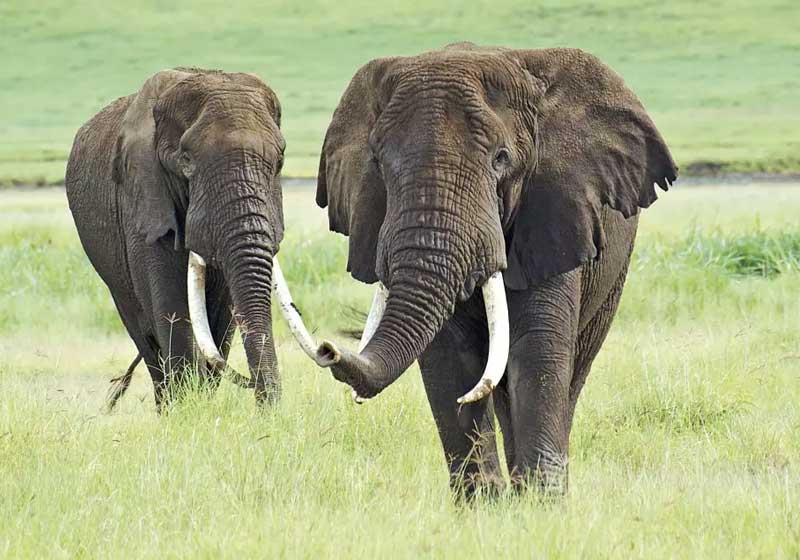
I’m usually not an early bird, but on safari you truly won’t mind getting up bright and early (that’s when the animals are most active). On my first safari day, I headed into Ngorongoro Crater, the world’s largest intact volcanic caldera, which is home to over 26,000 species of wildlife. Zebras, elephants, rhinos, antelopes, and flamingos live alongside each other on these vast grasslands, with baboons inhabiting the forest (yep, there’s a forest too), and hippos setting up shop in the various lakes. It felt like Noah’s Ark had just made a pit stop here to unload its cargo.
Exploring the Southern Serengeti
After Ngorongoro Crater, Tanzania, Geoffrey took me on a five-hour drive to the Southern Serengeti, through a variety of diverse landscapes. (Usually, travelers choose to fly, but I preferred driving to feel closer to the landscape). After a few hours of rattling along muddy off-roads, we reached the flat plains of the Southern Serengeti. The only objects breaking up the flatness were the occasional acacia tree and giant herds of wildebeests preparing for their northern migration.
Soon, we arrived at Serengeti Safari Camp, the most rustic of the trip. These accommodations consisted of sturdy canvas tents with all the essentials, but without any extra luxury safari in Tanzania. The most unique feature of this camp is the bucket showers. Because Serengeti Safari Camp is a mobile camp – moving with the wildebeest migration – there are no permanent showers like you’re probably used to. Instead, you inform a member of staff when you’re ready to shower; they’ll fill up a bucket with heated water, hoist it into position above your tent, and stand outside while you pull a chain to activate the water flow. If the bucket runs out of water, you just have to let them know, and they’ll refill it.
The best part about sleeping in a true bush camp like this is you’re truly immersed in nature and wildlife. While you never actually feel in danger, you do hear lions roaring at night or baboons chattering in the grass, and I even saw an elephant stroll past the front opening of my tent.
When we actually set out on safari the next morning, I started to understand that my whole “animals can’t actually talk” preconception might be wrong. Geoffrey would point out animals like lions and hyenas, and successfully predict how they would behave based on their body language and verbal communication. In one instance, he noticed a group of lions devouring a dead wildebeest.
“See the hyenas on the ridge?” Geoffrey said. “When the lions finish, they will come in and finish the meat.”
Sure enough, the hyenas chattered amongst each other while waiting for the lions, and the lions watched the hyenas from the corner of their eyes, ready for any mischief that might ensue. Then, as Geoffrey predicted, the lions left with full bellies, and the hyenas Adventure in Tanzania descended on the wildebeest remains. This drama between the lions and hyenas wasn’t exactly The Lion King, but it was a fascinating introduction to the social dynamics that play out between animals every day.
Navigating the Northern Serengeti
The next day, we started our long drive to the Northern Serengeti. Thanks to a comfortable safari vehicle (packed with snacks and drinks), the 6+ hour drive north through the mountains flew by rather quickly. It also helped that Nomad, Unforgettable Travel’s safari partner, provided sumptuous picnic lunches and breakfasts for our days on the road. Imagine a hotel buffet breakfast at a luxury hotel, but enjoyed in the Tanzanian bush with stunning views of the Serengeti.
The Northern Serengeti landscape is defined by hills covered in tall grass and rock formations reminiscent of Pride Rock. My lodge here was the most architecturally unique of the whole trip, inspired by the traditional Maasai culture and using locally-sourced materials in its construction. Lamai Camp sits atop a hill with panoramic views, and its cottages feel both luxurious and traditional. The floor-to-ceiling walls and doors mean you technically don’t even have to leave your room to go sightseeing, though you obviously still should.
Indeed, the Northern Serengeti was probably the best example yet that animals do speak to each other. While driving through a field of antelopes, Geoffrey stopped the car because he heard a bird call sounding from trees by the roadside.
“The bird is alerting the antelopes that there might be a predator nearby,” he predicted.
Soon after the antelope had bounded away, we spotted a leopard lying in the grass. His hunt ruined by the bird call, he disappeared in search of other prey. As Geoffrey explained, the animals always have their own stories, different every day, and the joy of his job was being able to witness those stories unfold.
As I prepared to board the small bush plane to return to Arusha, I said goodbye to Geoffrey on the airstrip. This was tougher than I expected. He had guided me safely across often precarious terrain, explained to me the intricacies of the Animal Kingdom, and showed me that The Lion King is, at least in spirit, based on a true story. When I think back on this trip now, I’m thankful for the layer of understanding he added to the safari and perhaps even more thankful for Unforgettable Travel’s impressive flexibility and seamless handling of the itinerary, which took the whole experience to the next level.
Recent Posts
8 Days Tanzania Luxury Safari
Climbing Mount Kilimanjaro: Routes, Costs, and Best Time to Trek
A First-Time Safari Adventure in Tanzania

What to Expect on a Tanzania Private Camping Safari
Mount Kilimanjaro Climbing Guide: Choosing the Best Time